







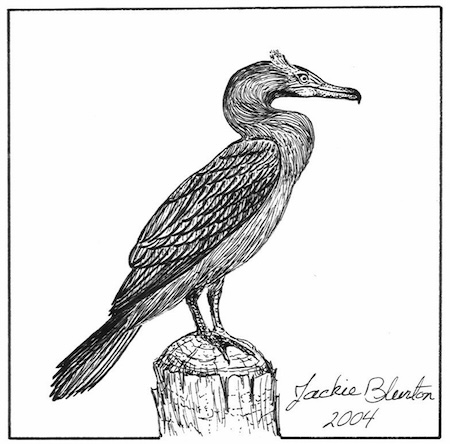
Double-crested Cormorant
Art by Jackie Blurton
Nature Note by the late Dr. Roland Shook
Cormorants are dark, long-necked diving birds found near water. However, both the Double-crested and Neotropic Cormorants are the only cormorants commonly found on fresh water. All species of cormorants are similar in their diet which consists mostly of fish. They feed on the surface, sometimes swimming with only their head, neck, and up-turned bill showing, but dive and swim underwater as well. Unlike most water birds, the feathers of cormorants are not waterproof, so cormorants enter the water to feed or bathe, then spend much of their time on exposed perches drying their plumage with wings spread. They fly with heron-like flaps and intermittent glides with their kinked necks slightly raised.
This species is one of the two cormorants found in our area. The adults are blackish, with an orange chin. During the March to May breeding season, the two plumes or crests seen on the top of the head become prominent, thus giving rise to the common name. The word cormorant comes from a long tradition in the Romance languages and means "sea crow."
Double-crested Cormorants have historically nested at Elephant Butte Reservoir and Bosque del Apache Refuge. This species makes nests of cottonwood branches and limbs lined with the soft inner bark of cottonwoods. These nests are placed in cottonwoods 25 to 30 feet above the ground. Common Egrets also inhabit Cormorant rookeries, which can spread over an acre or more.
Jackie's Note. Double-crested Cormorants migrate through our area. Look for them at Lake Roberts and Bill Evans Lake. You may see a small flock roosting in trees along the lake.