







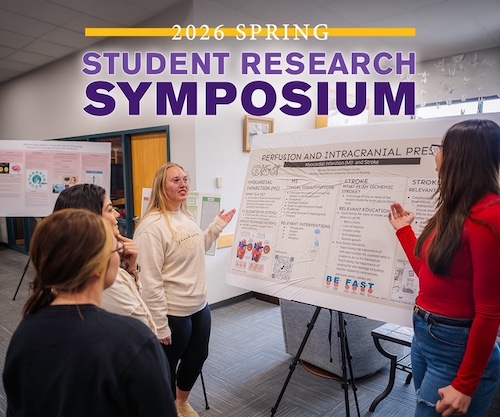
 Students present their findings at the Spring Student Research SymposiumSILVER CITY, NM — Western New Mexico University (WNMU) conducted its annual spring symposium in late April; the two-day event showcased academic excellence, creative scholarship and the diverse research initiatives of the university's faculty and students. The event provided a comprehensive platform for the university community to engage with emerging insights on topics from local historical preservation to advancements in environmental science.
In total, the symposium featured 93 presenters and drew an audience of 381 participants over the course of the two-day schedule. The event began with a series of in-person presentations held at the J. Cloyd Miller Library. From 9 a.m. to 4 p.m., the library's corridors and study spaces were transformed into vibrant hubs of intellectual exchange. Students and community members gathered to view poster sessions and attend live lectures that highlighted the university's dedication to rigorous inquiry and regional development.
The physical setting allowed for spontaneous networking and deep-dive discussions between presenters and attendees, fostering a collaborative atmosphere. The variety of presentations underscored the interdisciplinary nature of the institution, including detailed analyses of regional economic trends, innovative pedagogical approaches in rural education and creative showcases from the arts.
Transitioning to a modern, flexible format the second day of the symposium was held virtually on April 29. The university extended its reach beyond the physical Silver City campus, allowing remote students, alumni and statewide partners to participate in the festivities. The virtual sessions featured 24 presenters and 58 unique audience members. This digital shift ensured that high-caliber presentations remained accessible to a broader audience, reflecting a dedication to inclusivity and technological integration.
Presenters used screen-sharing and interactive features to bring their data to life, covering topics such as global health perspectives, digital marketing strategies and the intersection of technology and the humanities.
"The Spring Student Research Symposium was a brilliant success," said Assistant Vice President of Academic Affairs, Dean of the College of Arts and Sciences Katherine Oubre, Ph.D., speaking on behalf of the Symposium Steering Committee. "We had excellent faculty and staff audience presence, which helps immensely to creating the academic conference atmosphere."
As the event concluded, organizers noted the high level of engagement and the sophisticated nature of the inquiries posed by attendees. "The success of this two-day format provides a blueprint for future institutional events, balancing the value of face-to-face interaction with the necessity of digital accessibility," Oubre said.
Plans are already underway for next year's event, which aims to further expand the scope of research and the diversity of participants.