








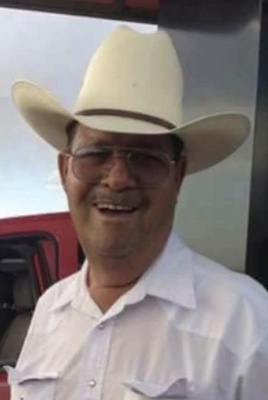
 Rito H. Chavez passed away on Saturday, July 18, 2026, in Elko, Nevada, surrounded by his loving family.
Rito was born on May 22, 1946, aboard a train in Colonia Heroína, Chihuahua, Mexico, to Gregorio Chavez and Carmen Hermosillo.
During his childhood, Rito and his family lived in several communities throughout Chihuahua before eventually settling in Colonia Alamillo as one of the founding families of that community. Ranch life shaped him from an early age. Horses, cattle, hard work, and the open country became an enduring part of who he was.
Rito often proudly said that he was "a daddy's boy." The loss of his father, who was killed by a lightning strike when Rito was still very young, devastated him. That loss contributed to his desire to leave home and, as he liked to say, "adventure the world."
As a young man, he traveled throughout Sonora and Sinaloa, working and collecting the many stories he would later share with his family. After the death of his brother, Ramón "Mon" Chavez, Rito returned home to Chihuahua.
Rito married Ramona Espinoza at a young age. Together, they had three children, two of whom passed away at very young ages. Following their divorce, he married Rosario Guadalupe Garcia in 1970. They shared nearly 46 years together, until her passing in April 2016. Together, they had seven children, three of whom passed away at birth or shortly afterward.
A cowboy in every sense of the word, Rito was completely at home on horseback. Having been raised on ranches, the work came naturally to him. He was known as an exceptional horseman and was second to none with a rope. His skill, toughness, and ability to handle livestock made him a highly sought-after ranch hand wherever he worked.
His journey eventually brought him to the United States, where he initially traveled and worked without legal status. He followed ranch work across Arizona, Idaho, and Wyoming, going wherever opportunity, horses, cattle, and the open country took him.
Rito loved telling stories about those years. He often spoke of nearly losing his life several times while crossing the desert on his way into the United States. He also enjoyed recounting the night he and his companions were offered shelter and all the jerky they could eat, only to discover the following morning that it had been bear jerky. Rito did not mind one bit, but he always laughed about the horrified reactions of his traveling companions. He also liked telling the story of the time he ate a porcupine because he and his companions had become so hungry during their journey.
Another favorite story was how he ended up in the northern states by accident. A livestock hauler offered him work and a ride to a ranch in Idaho. Unfamiliar with the states and not realizing how far north Idaho was, Rito accepted. Exhausted from his travels, he fell asleep during the journey and awoke days later to find himself in Idaho, where he went to work on the ranch.
In 1974, one of his ranch employers, recognizing Rito's skill and strong work ethic, petitioned for him to become a lawful permanent resident. This allowed him to continue working in the United States without fear of deportation.
In 1985, Rito petitioned for his wife and children to join him in the United States. He eventually settled at Waterloo Farm, located between Deming and Columbus, New Mexico—an agricultural operation that offered him something he had spent much of his life searching for: stability. After years of moving from place to place and following work wherever it led, Waterloo became the place where he could put down roots, provide for his family, and finish raising his children.
Although ranching had always been central to his identity, his years at Waterloo represented far more than employment. Waterloo gave him the steady home and dependable life he wanted for his wife and children.
After Rosario's passing in April 2016, Rito moved to Nevada to be closer to his family. In April 2017, he fulfilled one of his longtime dreams when he proudly became a citizen of the United States.
Rito loved conversation, especially with his family. He was a gifted teller of charras, always ready with a joke, a story, or another adventure from his younger years. He had a special ability to turn hardship into laughter and danger into a story worth hearing again. His children, grandchildren, and great-grandchildren grew up hearing about ranches, desert crossings, unexpected journeys, bear jerky, hard work, and the many places his cowboy life had taken him.
He was also known for his generosity. Rito freely offered food, shelter, and help to anyone who asked, often without hesitation and without expecting anything in return. Perhaps he remembered the hardships he had endured as a young man, when he sometimes depended on the kindness of strangers during his many travels and adventures. Having known hunger, danger, and uncertainty himself, he made sure that anyone who came to him in need would be welcomed and cared for.
Rito was preceded in death by his wife, Rosario Guadalupe Chavez; his parents, Gregorio Chavez and Carmen Hermosillo; his children, Joselo, Jaime, Blass, Claudio, and Isabel; and his siblings, Fausto, Rayitos, Ramón "Mon," Catalina, Rita, Ramoncita, and Roberto Fausto.
He is survived by his children: Carlos A. Chavez of El Paso, Texas; Maria Rayitos Chavez of Deming, New Mexico; Carmen and her husband, Luis Mireles, of Carlin, Nevada; Rito Chavez Jr. of Carlin, Nevada; and Joel Chavez and his wife, Yova Chavez, of Deming, New Mexico.
He is also survived by his siblings: Juana Chavez and her husband, Pedro Torres, of Kansas; Gregorio Chavez and his wife, Concepcion Chavez, Oklahoma; Rosa Chavez and her husband, Israel, of Mexico; and Manuela Chavez and her husband, Gildardo, of Mexico.
Rito is also survived by his grandchildren: Karla Chavez; Daniella Chavez; Carlos Chavez Jr.; Susy Lanham and her husband, Morgan; Luis Mireles and his wife, Casey; Stephany Chavez; Julian Mireles; Alejandra Chavez; Esteban Chavez; Briyitt Chavez; Adrian Chavez; Adilene Chavez; Joel Chavez Jr.; Sebastian Chavez; Khailany Chavez; and Lupita Chavez.
His great-grandchildren are Jose, Mia, Ailyn, Elias, Alonso, Theodore, Angel, Tony, Jaden, Uriah, Emma, Rebecca, Hudson, Giovanni, Isabel, Annabelle, Orlando, Mason, Celeste, and Adriel.
He also leaves behind countless nieces and nephews, along with many other relatives who were an important part of his life.
Rito lived the life of a true cowboy—not simply because of the hat, saddle, or rope, but because of the grit, independence, courage, humor, loyalty, and generosity with which he lived. From the ranches of Chihuahua to the open country of the American West, he worked hard, traveled far, raised his family, welcomed those in need, and gathered a lifetime of stories along the way.
A viewing will be held on Tuesday, July 28, 2026, from 12:00 p.m. to 5:00 p.m., and on Wednesday, July 29, 2026, from 8:00 a.m. to 1:00 p.m., followed by a service at 2:00 p.m. that day with Pastor Obed Rivera officiating. All services will be held at Baca's Funeral Chapels, 811 S. Gold Ave., Deming, New Mexico.
Cremation will follow in accordance with Rito's wishes. His ashes will be interred at Mountain View Cemetery alongside his wife, Rosario Guadalupe Chavez, on Thursday, July 30, 2026, at 11:00 a.m.
Serving as pallbearers will be Sebastian Chavez, Joel Chavez Jr., Adrian Chavez, Esteban Chavez, Julian Mireles, and Luis Mireles Jr.
Rito H. Chávez falleció el sábado 18 de julio de 2026 en Elko, Nevada, rodeado de su familia.
Rito nació el 22 de mayo de 1946 a bordo de un tren en Colonia Heroína, Chihuahua, México, hijo de Gregorio Chávez y Carmen Hermosillo.
Durante su infancia, Rito y su familia vivieron en varias comunidades del estado de Chihuahua antes de establecerse finalmente en Colonia Alamillo, donde fueron una de las familias fundadoras de esa comunidad. La vida en el rancho marcó su carácter desde muy pequeño. Los caballos, el ganado, el trabajo duro y el campo abierto se convirtieron en parte esencial de quien era.
Rito decía con orgullo que era un "hijo de papá". La muerte de su padre, quien perdió la vida al ser alcanzado por un rayo cuando Rito aún era muy joven, lo marcó profundamente. Aquella pérdida despertó en él el deseo de salir de casa y, como solía decir: "Me fui a la aventura".
De joven recorrió Sonora y Sinaloa trabajando y viviendo innumerables experiencias que años más tarde compartiría con su familia. Después del fallecimiento de su hermano Ramón "Mon" Chávez, Rito regresó a Chihuahua.
Rito contrajo matrimonio con Ramona Espinoza siendo muy joven. Juntos tuvieron tres hijos, dos de los cuales fallecieron a muy temprana edad. Después de su divorcio, en 1970 contrajo matrimonio con Rosario Guadalupe García. Compartieron cerca de 46 años de vida juntos, hasta el fallecimiento de Rosario en abril de 2016. De esa unión nacieron siete hijos, tres de los cuales fallecieron al nacer o poco tiempo después.
Vaquero de corazón y por naturaleza, Rito se sentía completamente en casa sobre un caballo. Haber crecido en ranchos hizo que ese trabajo le resultara natural. Era reconocido como un extraordinario jinete y un lazador sin igual. Su habilidad, fortaleza y experiencia para trabajar con el ganado hicieron que fuera un trabajador muy solicitado en todos los ranchos donde laboró.
Su camino finalmente lo llevó a los Estados Unidos, donde al principio viajó y trabajó sin documentos migratorios. Recorrió Arizona, Idaho y Wyoming siguiendo el trabajo en ranchos, yendo a donde hubiera oportunidades, caballos, ganado y campo abierto.
A Rito le encantaba contar sus charras y las historias de aquellos años. Con frecuencia relataba cómo estuvo a punto de perder la vida en varias ocasiones mientras cruzaba el desierto rumbo a los Estados Unidos. También disfrutaba contar la noche en que él y sus compañeros recibieron refugio y les ofrecieron toda la carne seca que quisieran comer, para descubrir a la mañana siguiente que en realidad era carne seca de oso. A Rito no le molestó en lo más mínimo; por el contrario, siempre se reía al recordar las expresiones de horror de sus compañeros. También le gustaba contar la ocasión en que él y sus compañeros tuvieron tanta hambre durante el trayecto que terminaron comiéndose un puercoespín.
Otra de sus historias favoritas era cómo terminó en los estados del norte por accidente. Un trailero que transportaba ganado le ofreció trabajo y llevarlo a un rancho en Idaho. Como no conocía los estados de la Unión Americana, aceptó la oferta. Agotado por el viaje, se quedó profundamente dormido y, un par de días después, despertó trabajando en un rancho de Idaho.
En 1974, uno de los propietarios del rancho donde trabajaba, al reconocer la habilidad de Rito, su ética de trabajo y su dedicación, presentó una petición para que obtuviera la residencia legal permanente en los Estados Unidos. Esto le permitió continuar trabajando sin el temor de ser deportado.
En 1985, Rito inició el trámite para que su esposa e hijos pudieran reunirse con él en los Estados Unidos. Finalmente se estableció en Waterloo Farm, ubicada entre Deming y Columbus, Nuevo México, una operación agrícola que le ofreció algo que había buscado durante gran parte de su vida: estabilidad. Después de muchos años de mudarse de un lugar a otro y seguir el trabajo dondequiera que se presentara, Waterloo se convirtió en el lugar donde pudo echar raíces, mantener a su familia y terminar de criar a sus hijos.
Aunque la vida de ranchero siempre fue parte fundamental de su identidad, los años que pasó en Waterloo representaron mucho más que un empleo. Waterloo le dio el hogar estable y la tranquilidad que siempre había deseado para su esposa e hijos.
Después del fallecimiento de Rosario en abril de 2016, Rito se mudó a Nevada para estar más cerca de su familia. En abril de 2017 cumplió uno de los mayores sueños de su vida al convertirse, con gran orgullo, en ciudadano de los Estados Unidos.
A Rito le encantaba conversar, especialmente con su familia. Era un gran contador de charras, siempre listo con un chiste, una anécdota o una nueva aventura de sus años de juventud. Tenía un don especial para convertir las dificultades en motivo de risa y los momentos de peligro en historias que valía la pena escuchar una y otra vez. Sus hijos, nietos y bisnietos crecieron escuchando relatos sobre ranchos, cruces por el desierto, viajes inesperados, carne seca de oso, trabajo duro y todos los lugares a los que la vida de vaquero lo llevó.
También era conocido por su generosidad. Siempre ofrecía comida, un lugar donde dormir y ayuda a todo aquel que la necesitara, sin esperar nunca nada a cambio. Tal vez recordaba las dificultades que él mismo había vivido cuando era joven, dependiendo muchas veces de la bondad de desconocidos durante sus viajes y aventuras. Porque conoció el hambre, el peligro y la incertidumbre, procuró que toda persona que llegara a su puerta encontrara un lugar donde fuera bienvenida y atendida.
Rito fue precedido en la muerte por su esposa, Rosario Guadalupe Chávez; sus padres, Gregorio Chávez y Carmen Hermosillo; sus hijos, Joselo, Jaime, Blass, Claudio e Isabel; y sus hermanos, Fausto, Rayitos, Ramón "Mon", Catalina, Rita, Ramoncita y Roberto Fausto.
Le sobreviven sus hijos: Carlos A. Chávez, de El Paso, Texas; María Rayitos Chávez, de Deming, Nuevo México; Carmen y su esposo, Luis Mireles, de Carlin, Nevada; Rito Chávez Jr., de Carlin, Nevada; y Joel Chávez y su esposa, Yova Chávez, de Deming, Nuevo México.
También le sobreviven sus hermanos: Juana Chávez y su esposo, Pedro Torres, de Kansas; Gregorio Chávez y su esposa, Concepción Chávez, de Oklahoma; Rosa Chávez y su esposo, Israel, de México; y Manuela Chávez y su esposo, Gildardo, de México.
Asimismo, le sobreviven sus nietos: Karla Chávez; Daniella Chávez; Carlos Chávez Jr.; Susy Lanham y su esposo, Morgan; Luis Mireles y su esposa, Casey; Stephany Chávez; Julián Mireles; Alejandra Chávez; Esteban Chávez; Briyitt Chávez; Adrián Chávez; Adilene Chávez; Joel Chávez Jr.; Sebastián Chávez; Khailany Chávez; y Lupita Chávez.
También le sobreviven sus bisnietos: José, Mia, Ailyn, Elías, Alonso, Theodore, Ángel, Tony, Jaden, Uriah, Emma, Rebecca, Hudson, Giovanni, Isabel, Annabelle, Orlando, Mason, Celeste y Adriel.
Además, deja un sinnúmero de sobrinos, sobrinas y muchos otros familiares que fueron una parte muy importante de su vida.
Rito vivió la vida de un verdadero vaquero, no solamente por el sombrero, la silla de montar o la reata, sino por la fortaleza, independencia, valentía, buen humor, lealtad y generosidad con las que vivió. Desde los ranchos de Chihuahua hasta los campos abiertos del oeste de los Estados Unidos, trabajó arduamente, recorrió grandes distancias, sacó adelante a su familia, recibió con los brazos abiertos a quienes necesitaban ayuda y reunió toda una vida de historias a lo largo del camino.
El velorio se llevará a cabo el martes 28 de julio de 2026, de 12:00 p. m. a 5:00 p. m., y el miércoles 29 de julio de 2026, de 8:00 a. m. a 1:00 p. m. El servicio funerario se celebrará ese mismo miércoles a las 2:00 p. m. con el Pastor Obed Rivera oficiando.
Todos los servicios se llevarán a cabo en Baca's Funeral Chapels, ubicada en 811 S. Gold Ave., Deming, Nuevo México.
De acuerdo con los deseos de Rito, posteriormente será cremado. Sus cenizas serán sepultadas junto a su esposa, Rosario Guadalupe Chávez, en el cementerio Mountain View, el jueves 30 de julio de 2026 a las 11:00 a. m.
Los portadores del féretro serán Sebastián Chávez, Joel Chávez Jr., Adrián Chávez, Esteban Chávez, Julián Mireles y Luis Mireles Jr.
To send flowers to the family or plant a tree in memory of Rito H. Chavez, please visit our floral store.